 Dehydration & Barrier
Why Products Sting When Your Barrier Is Damaged
When your skin barrier is damaged, even gentle products can sting. Learn why low ceramides make your skin reactive and what actually helps.
Skin science explained simply.
Show to your doctor, share with your sister.
11 articles on skin science, ingredients, and honest skincare advice
Dehydration & BarrierWhen your skin barrier is damaged, even gentle products can sting. Learn why low ceramides make your skin reactive and what actually helps.
When your skin barrier is damaged, even gentle products can sting. Learn why low ceramides make your skin reactive and what actually helps.
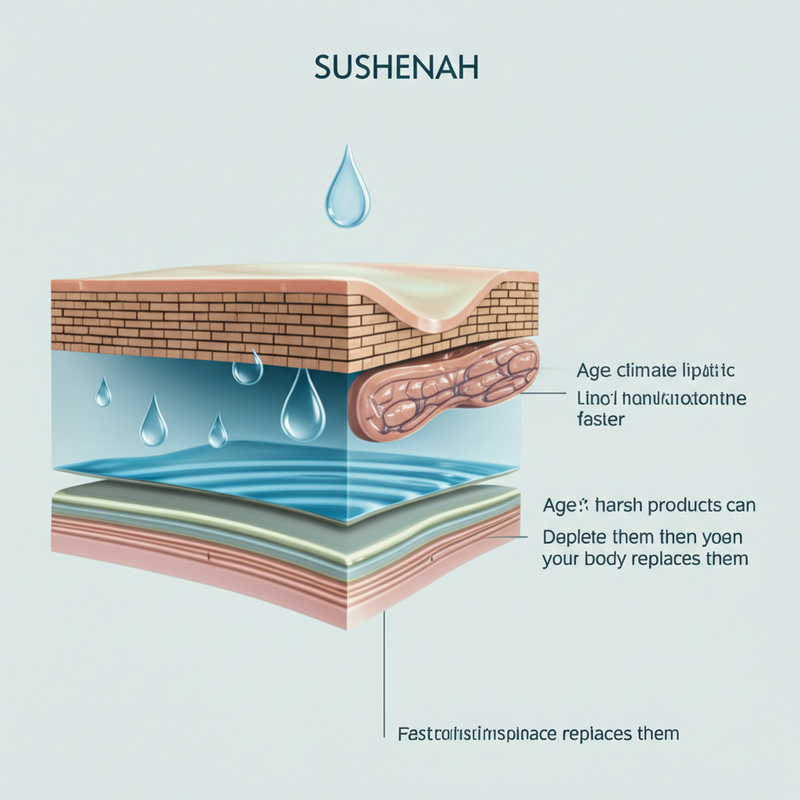
Ceramides make up 50% of your skin's moisture barrier. Learn why these lipids are essential for preventing dehydration and protecting sensitive skin.

Your skin barrier structure changes with temperature. Learn why winter skin feels different and what that means for barrier health.

The stratum corneum is where ceramides do their barrier work. Understand why your outermost "dead" skin layer is actually your best defense.

Your skin produces ceramides through a complex biosynthesis pathway. Understand how this natural barrier-building process works.

Not all ceramides perform the same function. Research identifies three critical types (EOS, NP, EOH) essential for barrier integrity.
 anatomy
Your skin has three distinct layers: epidermis (barrier), dermis (structure), and subcutaneous fat (cushion). Here's what each does—and why it matt...

When products sting, it's usually a sign of barrier damage—not the product "working." Here's the science behind why compromised skin reacts.

Lamellar granules are tiny organelles that deliver lipids to repair your skin barrier. Here's how they work—and why barrier repair mimics this proc...
Showing 11 articles