01 / AYURVEDIC BOTANICAL
Saffron
Crocus sativus
CAROTENOID COMPOUNDS
Crocetin, a saffron-associated compound, has been studied for oxidative stress and pigment production in laboratory cells.
Crocetin · laboratory study SUSHENAHCAUSE-BASED SKINCARE
FOUR CAUSES
Understand the concern. Discover the thinking behind your care.
02 / A FORMULATION STARTING POINT
When melanin activity becomes uneven.
Dark marks · Uneven tone · Sun-related patches
Explore Pigment Care01 / WITHIN THE SKIN
Melanocytes make melanin and pass it to neighbouring skin cells. Sun exposure, hormones and inflammation can affect how pigment is produced and distributed.
02 / THE SUSHENAH INTERPRETATION
We look beyond surface colour to the skin environment around melanin activity: oxidative stress, inflammatory signalling and uneven pigment production.
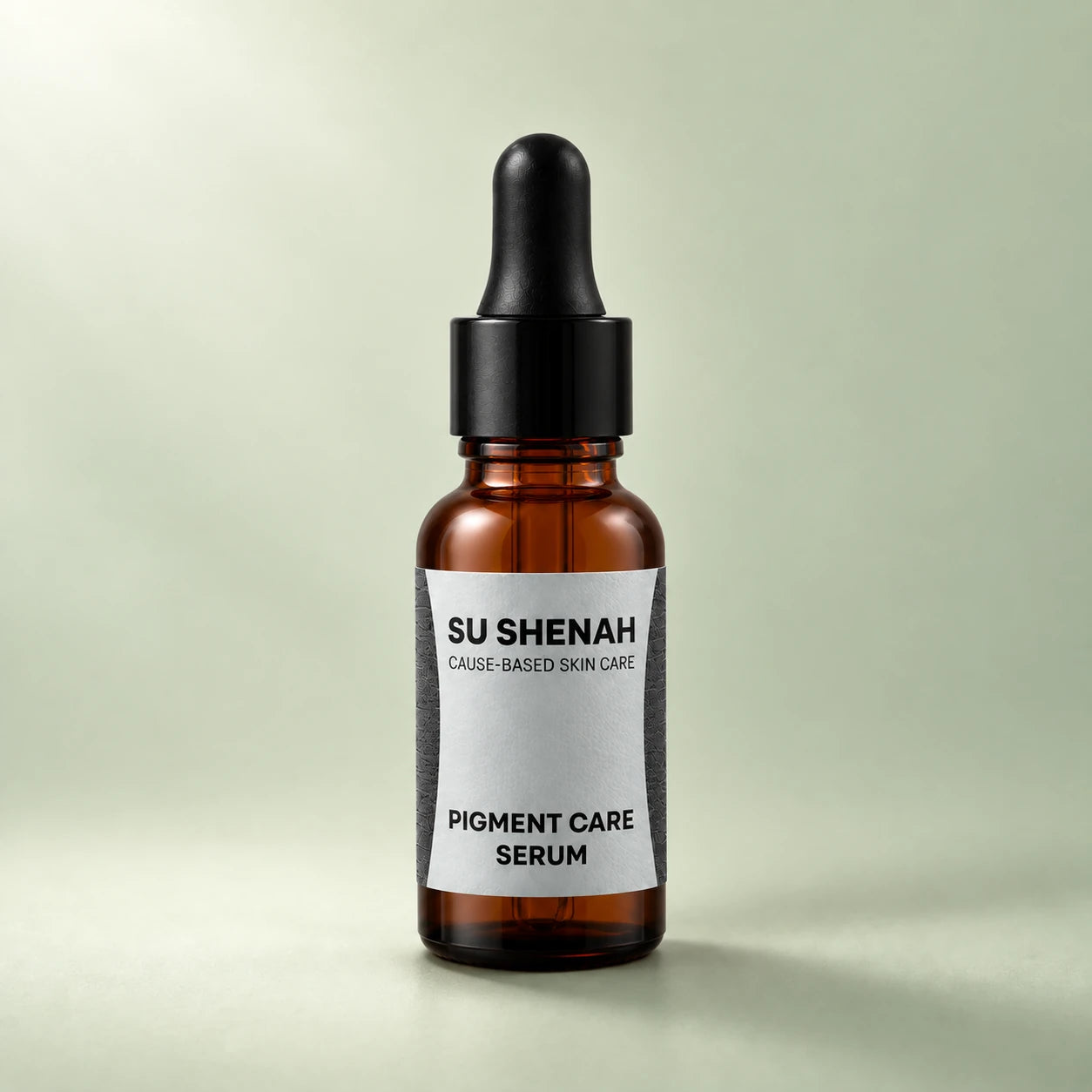
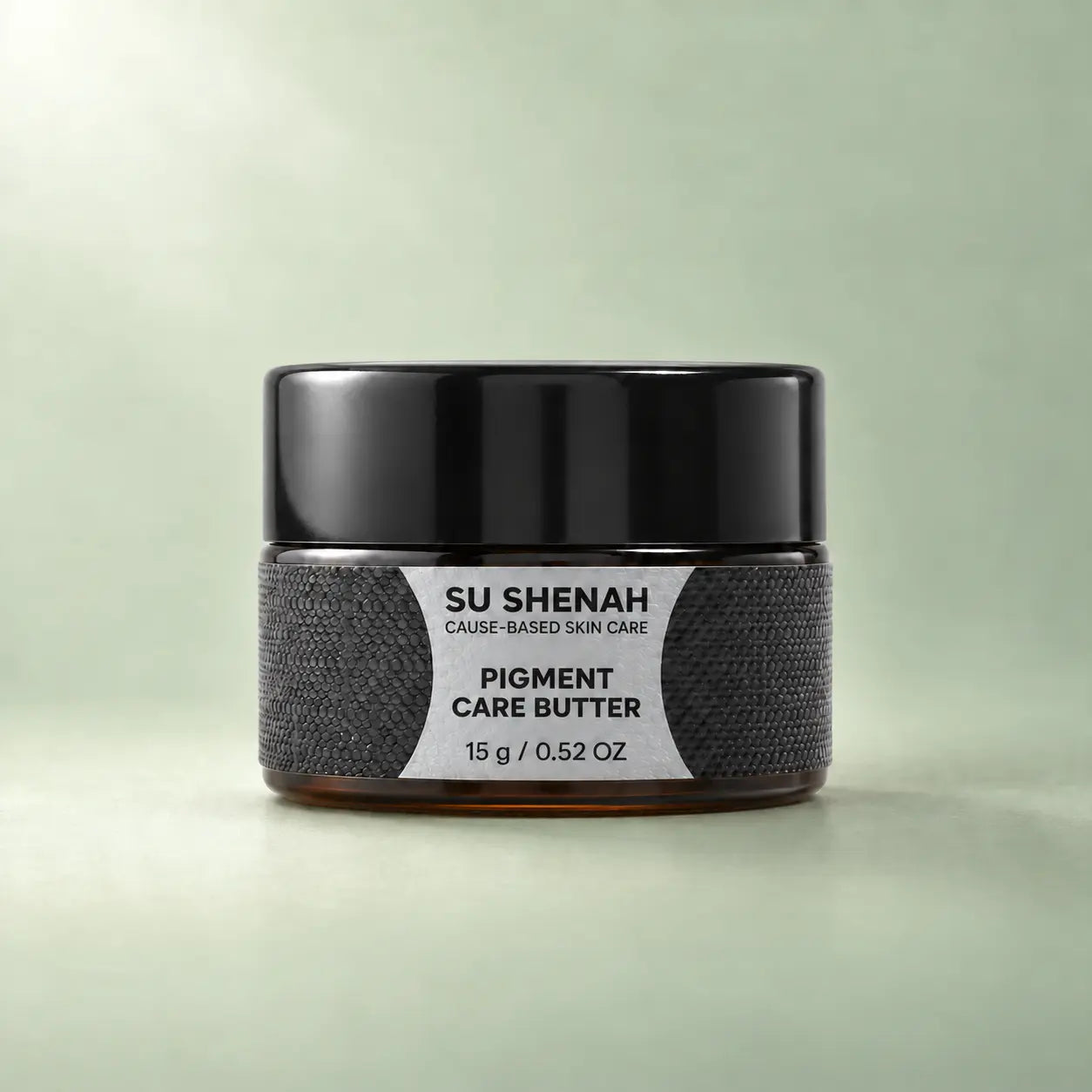
Pigment Care combines selected Ayurvedic botanicals with a BCS lipid blend designed by fatty-acid composition. The intention is balanced-looking tone and a well-conditioned skin environment, without bleaching or stripping.
Oxidative stress, inflammation or altered pigment signals.
Pigment production and distribution become uneven.
Dark patches, pimple marks or uneven tone.
Phytochemical families studied in relation to oxidative stress and melanin-related pathways.
Natural oils combined by fatty-acid profile through the Biomolecular Carrier System.
Designed around the processes associated with uneven-looking pigmentation.
03 / INGREDIENTS, WITH A PURPOSE
Ayurvedic botanical choices, examined through their chemistry.
Crocus sativus
Crocetin, a saffron-associated compound, has been studied for oxidative stress and pigment production in laboratory cells.
Crocetin · laboratory studyHelianthus annuus
Contributes to the overall lipid profile. The blend is designed for the formulation as a whole.
Oil composition · human skin studyExamples from the published Pigment Care ingredient lists. View the source list
04 / THE PHILOSOPHY, FORMULATED
Selected botanicals and a considered lipid composition for uneven-looking tone.
YOUR SKIN. A CONSIDERED NEXT STEP.