Formulated in Bengaluru. Every ingredient, in the open.Nothing to hide

PIGMENTATION & UNEVEN TONE

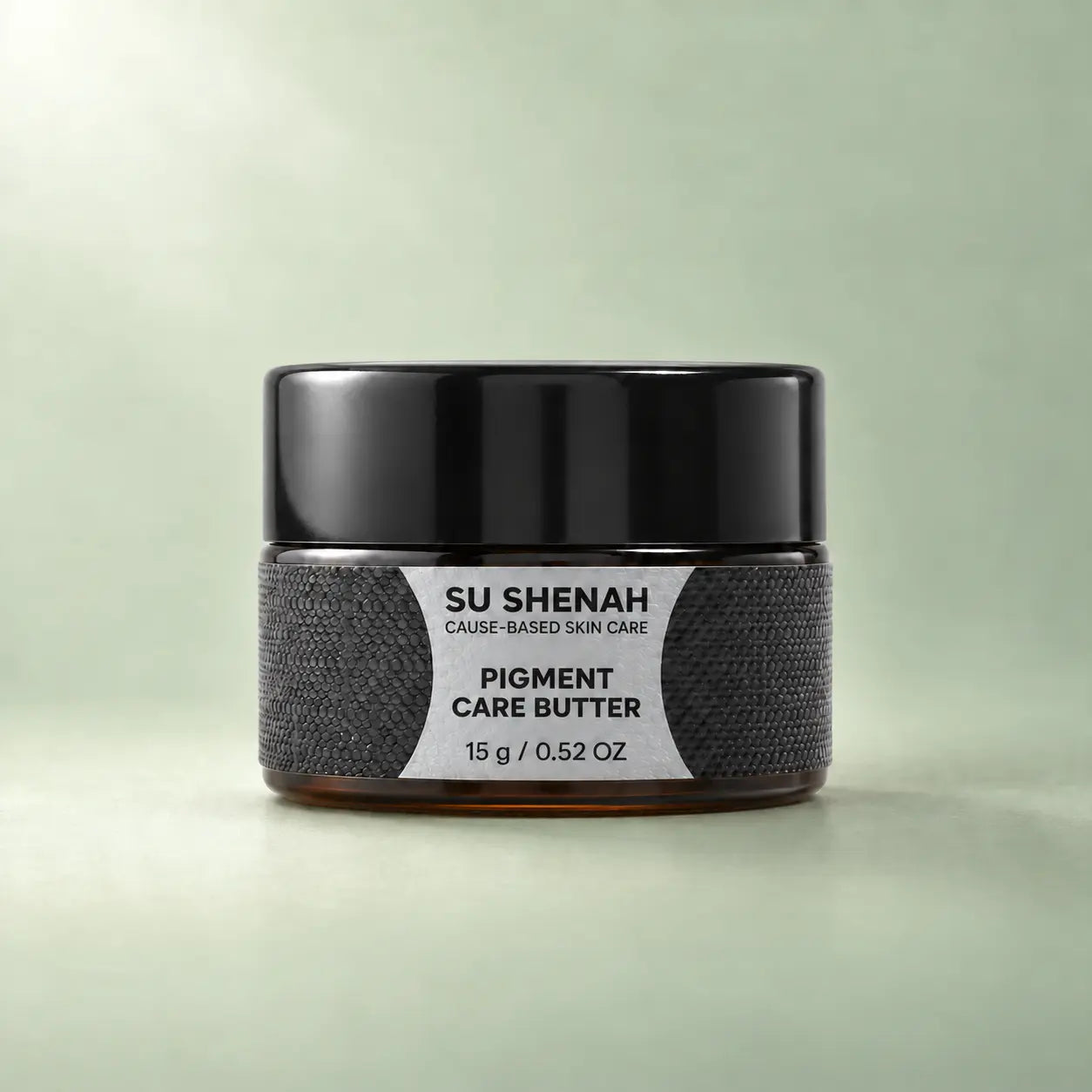
Pigment
Care Butter

Considered care for uneven-looking tone.

Created for daily care when melasma, post-pimple marks, suntan or uneven tone are your concern. Sea buckthorn oil, Garcinia and Aloe Vera butter meet conditioning botanical oils, with cinnamon and other aromatic essential oils.

  • Care for uneven-looking tone
  • Rich botanical conditioning
  • Helps soften dry skin
  • Helps maintain suppleness
Single jar
PRICE₹495Inclusive of taxes
Quantity counts single 15 g jars.
1

UNDERSTANDING UNEVEN SKIN TONE

Why this formula exists.

Melanin gives skin its colour. Sun exposure, hormonal changes and inflammation can affect how evenly it appears. Melasma, post-pimple marks and suntan have different triggers, so understanding the concern matters.

This butter brings whole herbs together with an oil-and-butter base for a softer, more supple feel. Sea buckthorn and other botanical oils contribute conditioning lipids; Aloe Vera and olive butters add richness. Cinnamon essential oil contributes to the aroma.

Formulated with Sushenah’s BCS approach

A considered lipid blend, designed around smooth application, skin conditioning and comfort.

Explore the BCS science
Melasma
Pimple marks
Suntan
Uneven tone
THE FORMULATION FOCUS
Whole herbsBotanical oilsButters + beeswax
Pigment Care ButterDaily conditioning for uneven-looking skin.

SELECTED FOR THIS BUTTER

Why these ingredients.

Explore the botanical chemistry and each ingredient’s role in the blend.

Hover, tap or press Enter to explore. Use the arrow or Escape to return.

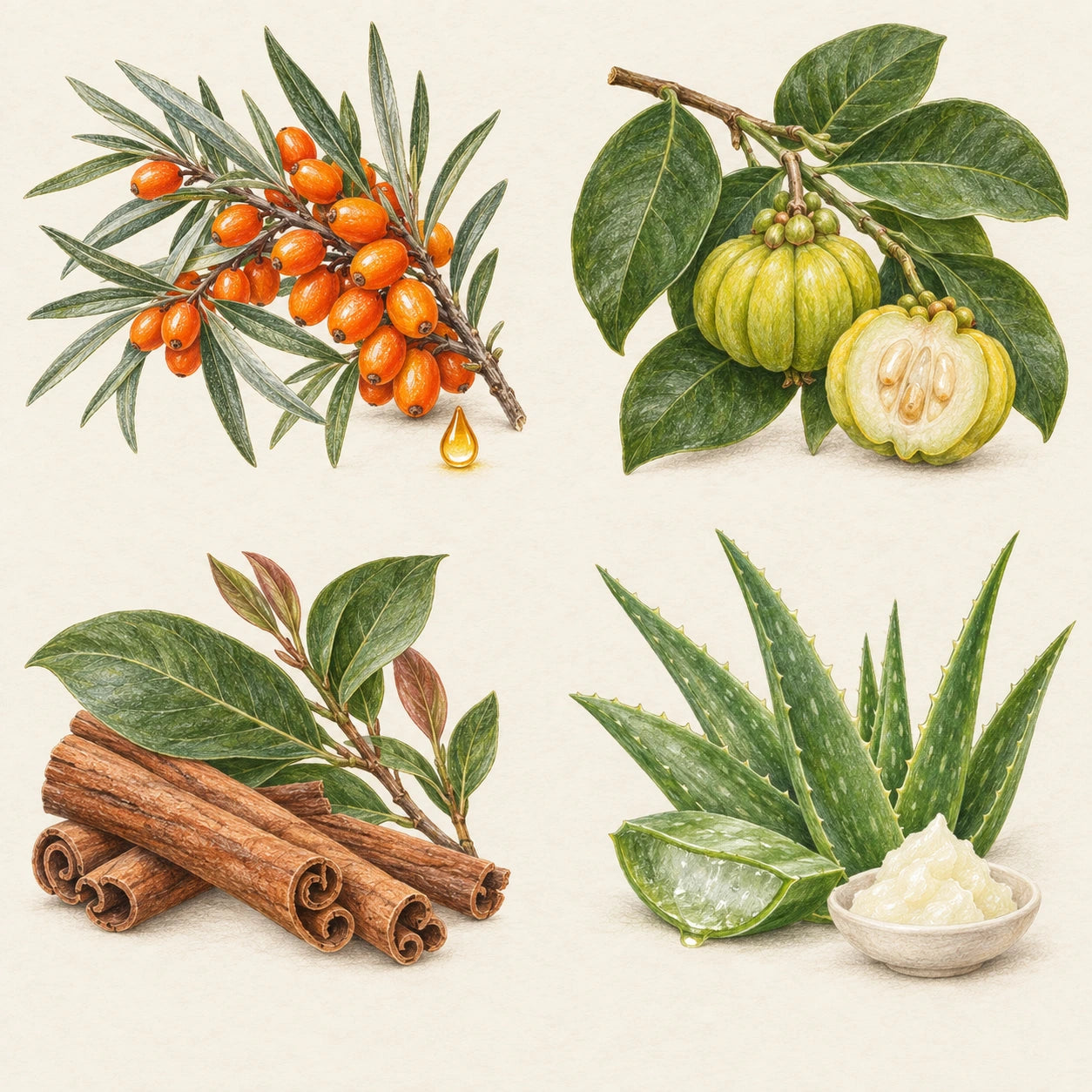
Coloured pencil study of orange sea buckthorn berries and slender leaves

Sea buckthorn oil

Coloured pencil study of lobed Garcinia gummi-gutta fruit and leaves

Garcinia

Coloured pencil study of Ceylon cinnamon bark quills and leaves

Cinnamon essential oil

Coloured pencil study of aloe vera leaves beside a small dish of pale cosmetic butter

Aloe Vera butter

Complete Ingredients

  1. Nagaramotha (Cyperus scarious)
  2. Brahmi (Bacopa monnieri)
  3. Vetiver (Vetiveria zizanioides)
  4. Padmaka (Prunus cerasoides)
  5. Haritaki (Terminalia chebula)
  6. Daruhaldi (Berberis aristata)
  7. Saffron (Crocus sativus)
  8. Garcinia (Garcinia gummi-gutta)
  9. Argan oil (Argania spinosa L.)
  10. Hemp oil (Cannabis sativa)
  11. Sunflower oil (Helianthus annuus)
  12. Grape seed oil (Vitis vinifera)
  13. Wheat germ oil (Triticum vulgare)
  14. Sea buckthorn oil (Hippophae rhamnoides)
  15. Black sesame oil (Sesamum indicum)
  16. Black seed oil (Nigella sativa)
  17. Aloe Vera butter (Aloe barbadensis miller)
  18. Olive butter (Olea europaea)
  19. Beeswax (Cera alba)
  20. Ylang Ylang essential oil (Cananga odorata)
  21. Cinnamon essential oil (Cinnamomum verum)
  22. Peru balsam essential oil (Myroxylon balsamum)
  23. Patchouli essential oil (Pogostemon cablin)
  24. Ginger lily essential oil (Hedychium coronarium)
  25. Jasmin sambac essential oil (Jasminum sambac)

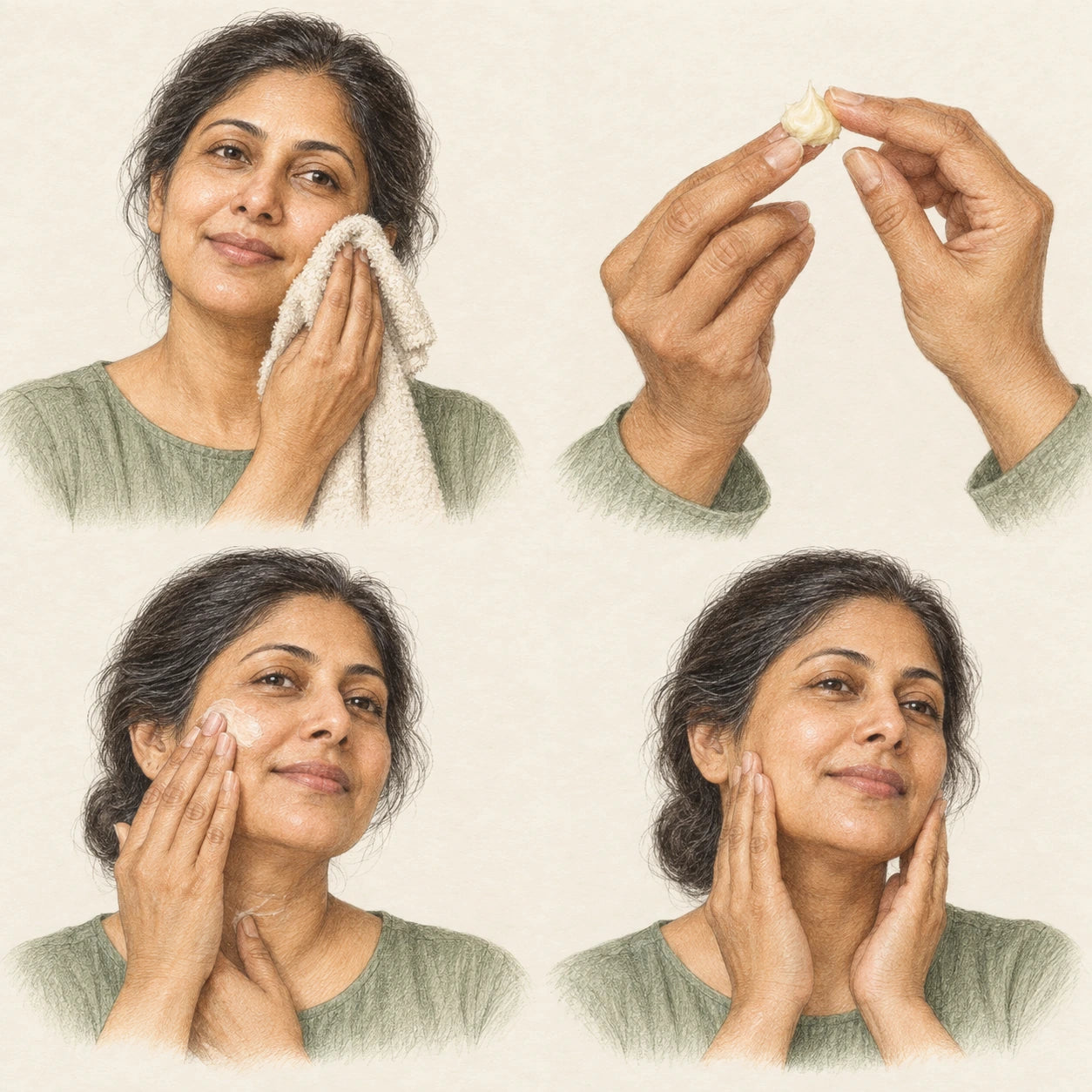
YOUR DAILY CARE RITUAL

How to use it.

  1. Pencil illustration of a clothed adult gently patting her cheek with a soft towel

    Cleanse and pat.

    Cleanse gently, then pat with a soft towel. Leave your skin slightly damp.

  2. Pencil illustration of a small amount of butter being warmed between clean fingertips

    Warm a little.

    Take a small amount with clean fingertips. Warm it between your fingers so it spreads easily.

  3. Pencil illustration of a clothed adult applying a thin layer of butter to her cheek and neck

    Apply a thin layer.

    Smooth over areas of uneven-looking tone on the face and neck. Avoid the eye area and broken skin.

  4. Pencil illustration of a clothed adult gently massaging her cheeks and jawline
    Key step

    Take time to massage.

    Massage is a key part of this routine. Use slow, gentle circular motions and light upward strokes over the face and neck until evenly spread. Keep the pressure comfortable and avoid pulling the skin.

Contains cinnamon, Peru balsam and other aromatic oils; test a small area first and avoid if fragrance-sensitive. Stop if skin stings or becomes irritated. For melasma, seek individual advice from a dermatologist.

Ask Sushenah